When pavement problems appear on commercial properties, the immediate assumption is often that the asphalt itself is failing. In many cases, however, the real issue begins long before cracks or surface wear become visible. Traffic flow patterns play a significant role in how a parking lot ages, and poor traffic distribution can shorten pavement lifespan even when the surface was properly installed.
For property managers and commercial property owners throughout Utah, understanding how vehicles move through a property can reveal why certain parking lots require more frequent asphalt maintenance than others.
Every parking lot is designed to guide vehicles from one location to another. Entrance placement, parking layouts, drive lanes, and building access points all influence how traffic moves across the property.
The challenge is that drivers naturally choose the quickest and most convenient routes. Over time, these repeated travel patterns create concentrated traffic corridors that experience significantly more stress than other areas.
Common traffic concentration points include:
While the rest of the parking lot may receive moderate use, these locations absorb a disproportionate amount of vehicle activity every day.
One of the most overlooked pavement challenges is traffic funneling. When a parking lot layout encourages vehicles to repeatedly use the same routes, stress becomes concentrated in a relatively small area.
This concentration affects pavement performance because vehicles are constantly accelerating, braking, and turning in the same locations. The result is not necessarily immediate damage, but rather accelerated wear compared to less traveled sections of the property.
Commercial properties that experience high customer turnover, frequent deliveries, or steady employee traffic are particularly susceptible to these concentrated wear patterns.
Many property managers focus on customer traffic while overlooking service and delivery activity. Yet delivery routes often create some of the highest stress areas on a property.
Loading zones, dumpster enclosures, and service entrances frequently experience:
Because these areas support heavier vehicles than standard parking spaces, they often require additional attention during pavement evaluations and maintenance planning.
Parking lots that age more evenly often have one thing in common: traffic is distributed across a larger portion of the property. When vehicles have multiple access points, clear directional guidance, and efficient circulation routes, pavement stress is less concentrated.
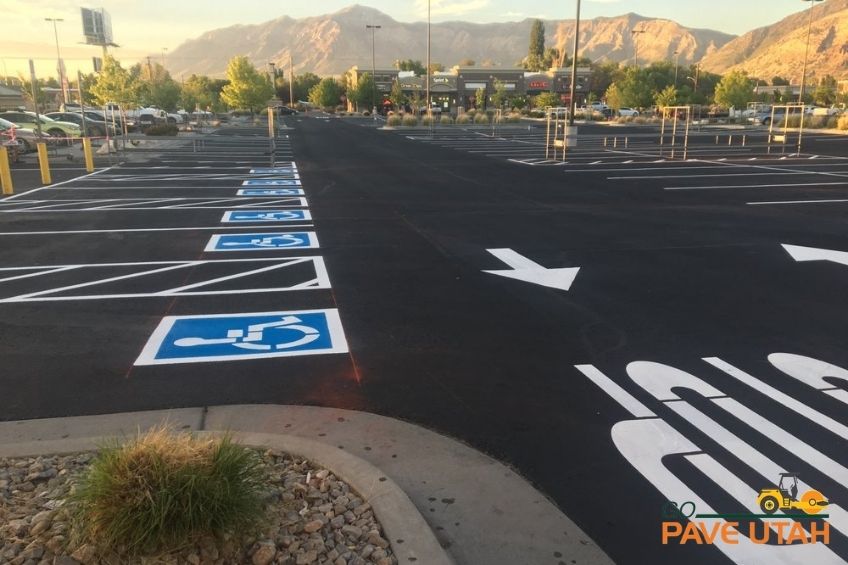
Strategic striping, directional markings, and traffic flow planning can help reduce excessive wear in high-use areas. Property managers who evaluate traffic movement alongside pavement conditions often gain a better understanding of where future maintenance needs are likely to develop.
Working with Go Pave Utah helps commercial property managers evaluate not only pavement condition but also the traffic patterns contributing to long-term wear. Their team assesses traffic flow, parking lot layout, pavement performance, and maintenance needs to identify opportunities that support longer pavement life.
Through services such as asphalt maintenance, striping, crack sealing, and pavement repair, Go Pave Utah helps commercial properties throughout Utah protect their pavement investments and improve overall property performance.
Sometimes the biggest threat to a parking lot is not weather or age. It is the daily traffic patterns that slowly concentrate stress in the same locations year after year. Understanding those patterns can help property managers make smarter decisions that extend pavement life and reduce long-term maintenance costs.