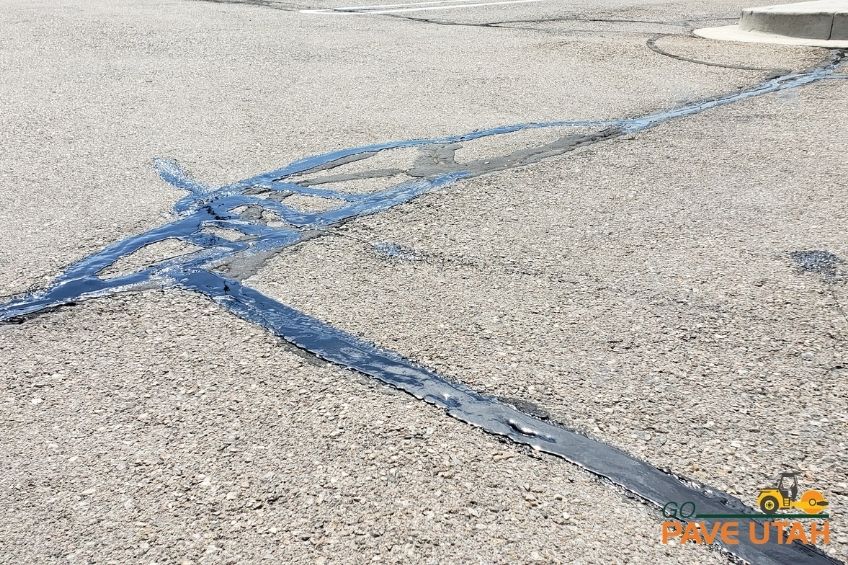
A crack in a commercial parking lot may look like a simple maintenance issue, but the shape, location, and pattern of cracking can provide useful clues about pavement condition. Some cracks develop as asphalt ages and moves, while others can indicate stress or deterioration that deserves a closer look.
For Utah property managers, recognizing these differences can make asphalt crack sealing and pavement maintenance more strategic. Instead of treating every crack exactly the same, understanding what the pavement is showing can help determine the appropriate next step.
Long, relatively straight cracks are common on asphalt surfaces, but their direction can help describe what is happening. Transverse cracks run across the pavement, while longitudinal cracks generally follow the direction of traffic or paving.
Property managers may notice:
These cracks can develop from factors such as temperature-related movement, pavement aging, or conditions associated with joints and construction. When appropriate, sealing cracks can help limit water from entering through these openings and affecting the pavement below.
Damage developing along the perimeter of a parking lot can tell a different story. Pavement edges do not always receive the same support as interior areas, and drainage, surrounding soil conditions, or repeated traffic near the edge can contribute to deterioration.
Warning signs can include:
Simply noticing where the cracking occurs can help property managers recognize that the surrounding conditions may deserve attention along with the visible asphalt damage.
When cracks begin connecting into a pattern resembling reptile skin, the pavement may be showing more than ordinary surface aging. Often called alligator or fatigue cracking, this type of distress is typically associated with repeated traffic loading and a loss of structural support or strength within the pavement system.
This is where identifying the crack pattern becomes particularly important. Asphalt crack sealing is not a structural repair, so widespread alligator cracking should not automatically be treated like an isolated crack. The affected area should be evaluated to determine the cause and whether patching or another pavement repair is more appropriate.
Utah pavement experiences a wide range of environmental conditions throughout the year. Hot summer temperatures, strong sunlight, moisture, and substantial seasonal temperature changes all place demands on asphalt as it ages.
Property managers should pay attention to:
The goal is not to diagnose an entire parking lot from a single line in the asphalt. It is to recognize when pavement is changing and respond before deterioration becomes easier to see and harder to manage.
Not every asphalt crack means the same thing, and not every crack calls for the same solution. Location, pattern, pavement condition, and the surrounding surface should all be considered when deciding whether crack sealing, repair, patching, or another maintenance approach makes sense.
Working with Go Pave Utah helps commercial property managers throughout Utah evaluate pavement cracking and determine an appropriate response. From asphalt crack sealing to patching, repair, sealcoating, and paving, the right service starts with understanding what the pavement actually needs.
A crack may be small, but the pattern can tell a much bigger story. Paying attention to that story can help commercial properties make smarter pavement maintenance decisions before the next chapter becomes a more expensive one.