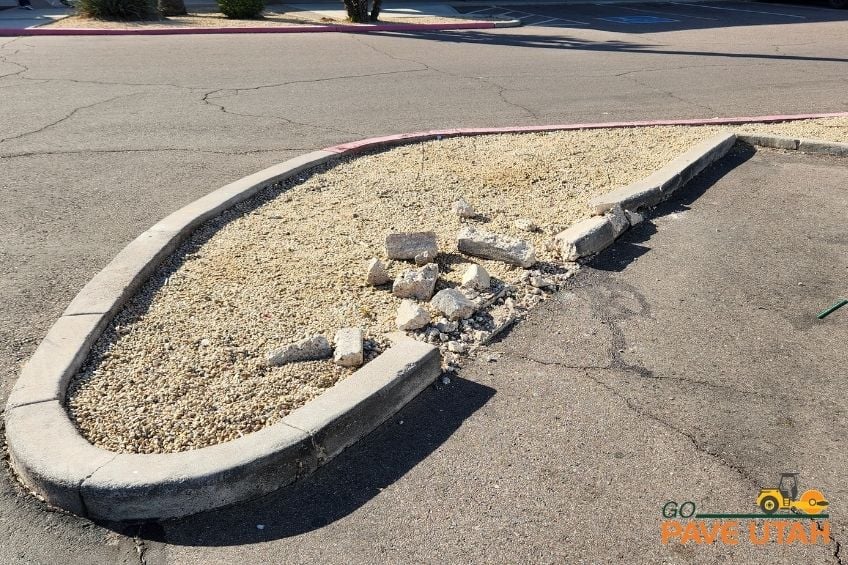
Concrete damage has a way of becoming part of the scenery. A crack near an entrance, a deteriorating section beside a building, or a worn concrete pad may be noticed when it first appears, then gradually become something everyone simply works around.
For Utah property managers, that familiarity can make commercial concrete repair easy to postpone. But concrete serves many different jobs across a commercial property, and deterioration can affect appearance, functionality, and how individual areas perform. Taking a fresh look at those surfaces can reveal problems that have been hiding in plain sight.
Because concrete deterioration often develops slowly, property managers may stop noticing it over time. Small cracks widen, edges begin to break down, and isolated surface damage can spread across larger sections. When the area remains usable, there is a tendency to treat the damage as cosmetic rather than operational. Regular property inspections help reset that perspective by giving managers a chance to evaluate concrete based on its current condition rather than simply accepting the wear they have grown used to seeing.
Concrete across a commercial property is exposed to very different demands depending on where it is located. Entry areas and walkways handle constant pedestrian traffic, while dumpster pads, loading areas, and service zones may experience concentrated vehicle weight and repeated turning movements. Concrete slabs near buildings may face different drainage or settlement conditions than areas farther from the structure. Understanding how each section is used helps explain why some areas deteriorate faster and why a single repair strategy may not make sense for every part of the property.
Where concrete damage appears can provide useful clues about what is causing it. Cracking near a loading area may be tied to repeated heavy vehicle traffic. Deteriorating edges near an entrance may reflect constant use or impact. Uneven sections can point to settlement or support issues beneath the surface. Instead of looking only at the visible defect, property managers can evaluate how the surrounding area is being used and whether drainage, traffic, or other site conditions may be contributing to the problem.
Concrete does not need to be severely broken before it begins affecting the property. Cracks can widen, chipped edges can deteriorate further, and uneven sections can become more noticeable as traffic continues across them. Visible damage can also make an otherwise well-maintained commercial property feel neglected. Addressing these concerns through timely commercial concrete repair can help restore damaged areas before deterioration becomes more extensive and more disruptive to daily operations.
Commercial concrete should be evaluated as part of the entire property, not only when a major failure occurs. Entry areas, walkways, slabs, loading zones, and other concrete surfaces all contribute to how the property functions and how it is perceived.
Working with Go Pave Utah gives Utah property managers a local partner for evaluating damaged commercial concrete and determining the right repair approach. By identifying areas that are beginning to deteriorate and addressing them before the damage spreads, commercial properties can maintain safer, cleaner, and more functional exterior spaces over the long term.