When you manage a commercial property in Utah, pavement failure rarely happens at random. Damage tends to appear in predictable locations where stress, weight, and environmental exposure are highest. Recognizing these patterns early allows you to take a more informed approach to maintenance and avoid larger repair issues. Instead of reacting to widespread damage, you can focus on the areas most likely to fail first and protect the rest of your pavement investment.
Entry and exit points are often the first areas to show wear. As vehicles slow down, turn, and accelerate, they place repeated pressure on the same sections of pavement. Over time, this constant movement weakens the surface and leads to cracking.
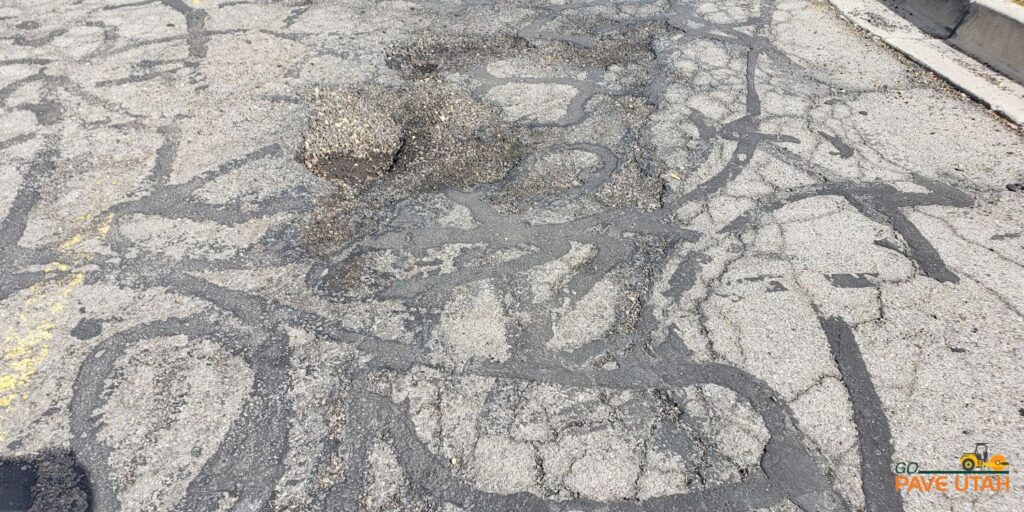
These areas often reveal early warning signs of deeper issues. One of the most recognizable patterns is alligator cracking, a web-like series of cracks that signals failure beneath the surface. When this appears, it typically means the supporting layers have begun to break down. Addressing these areas early with targeted asphalt repair helps prevent damage from spreading across the property.
High-turn areas such as corners and tight drive lanes experience more friction than straight paths. As vehicles pivot, the surface is subjected to twisting forces that wear down the asphalt more quickly.
In Utah, this becomes more pronounced during warmer months. As asphalt softens under heat, heavy vehicles can begin to shift the surface layers. This leads to slippage cracking or shoving, where the pavement forms ripples or crescent-shaped cracks. These patterns are a sign that the surface is moving under pressure rather than simply wearing down.
Maintaining these zones with timely asphalt patching helps restore stability and prevents further distortion.
Dumpster pads, loading zones, and delivery areas are exposed to concentrated weight on a regular basis. Unlike standard parking areas, these locations must support heavy vehicles that often remain stationary for extended periods.
This repeated stress compresses the asphalt and weakens the structure beneath. Over time, the surface begins to show depressions, cracking, and surface fatigue. If left untreated, these areas can quickly become some of the most expensive sections of pavement to repair.
Identifying and reinforcing these zones early helps preserve the surrounding pavement and reduces long-term repair costs.
Water is one of the most damaging elements affecting asphalt performance. Low areas where water collects allow moisture to seep into the pavement and weaken its foundation.
In Utah’s colder seasons, this issue becomes even more aggressive. When water freezes, it expands by roughly nine percent, creating internal pressure within cracks and beneath the surface. This expansion acts like a force pushing outward, breaking apart the asphalt from within. Over repeated cycles, what started as a minor drainage issue can lead to significant structural damage.
Addressing drainage problems early helps prevent this cycle and protects the integrity of the pavement.
Working with Go Pave Utah allows you to identify these high-stress areas before they turn into widespread problems. Their team evaluates traffic patterns, surface conditions, and drainage behavior to develop targeted solutions that extend pavement life.
By focusing on where pavement fails first, you can take a proactive approach that reduces long-term costs and supports safer, more efficient properties. Commercial properties across Utah benefit from understanding these patterns and working with Go Pave Utah to keep pavement performing at a high level.