Most parking lot damage starts where no one can see it. While cracks and potholes get the most attention, water beneath the asphalt is often doing the greatest damage. That's why routine asphalt maintenance is about more than keeping pavement looking good. It helps protect the foundation that supports your parking lot, extend pavement life, and reduce the risk of costly repairs. For commercial properties throughout Utah, understanding what happens below the surface is the first step toward making smarter maintenance decisions.
Commercial parking lots are built in layers. Beneath the asphalt surface are the base, subbase, and subgrade, each designed to distribute the weight of vehicles. According to the Federal Highway Administration, moisture entering the pavement structure through cracks, joints, pavement edges, and other surface openings reduces the strength of the underlying materials. Combined with constant vehicle traffic and repeated loading, this moisture gradually weakens the pavement structure and can significantly shorten its service life.
Once water infiltrates through surface defects, the supporting layers begin to lose strength. Instead of evenly distributing vehicle loads, the pavement flexes under traffic. This repeated movement places additional stress on the asphalt surface, allowing small imperfections to expand into larger problems over time. Because these changes occur below ground, property managers often do not recognize the issue until visible damage appears.
Many commercial property owners focus on repairing the crack or pothole they can see. While those repairs are important, they address the symptom rather than the cause if excess moisture remains beneath the pavement.
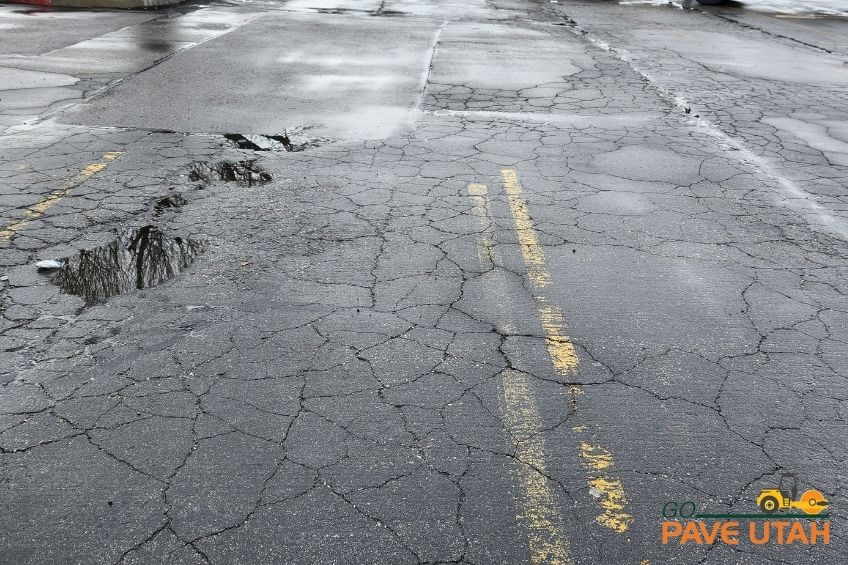
As the foundation weakens, pavement may begin to develop alligator cracking, depressions, rutting, or potholes. Standing water can make the situation worse by allowing even more moisture to enter the pavement structure. Each weather event and every vehicle traveling across the affected area adds stress to an already weakened foundation.
Without correcting drainage concerns and repairing damaged pavement promptly, deterioration often continues to spread.
The most effective way to reduce moisture-related pavement damage is to limit the opportunities for water to enter the pavement in the first place. Routine inspections can identify developing cracks, failing joints, deteriorated pavement edges, and areas where water consistently ponds after storms.
Services such as crack sealing, asphalt sealcoating, asphalt patching, and timely asphalt repairs help preserve the pavement surface while reducing moisture infiltration. Maintaining proper drainage throughout the property also helps direct water away from paved areas before it can affect the supporting structure below.
Addressing these conditions early is typically less disruptive and more cost-effective than waiting for structural pavement failures to develop.
The most expensive pavement damage is often the damage that cannot be seen. Moisture beneath a parking lot can slowly weaken the foundation long before surface deterioration becomes obvious, making proactive maintenance an important part of protecting commercial properties.
Working with Go Pave Utah helps property managers, business owners, and commercial property managers identify pavement issues before they become major repairs. From asphalt repair and asphalt sealcoating to ongoing pavement maintenance, Go Pave Utah provides solutions that help extend pavement life and keep Utah commercial properties operating safely and efficiently.