Utah winters are unforgiving, and your asphalt feels the impact long before you do. As temperatures drop and storms move in, the pavement on your property becomes vulnerable to a chain reaction of damage that often goes unnoticed until spring. For property managers, business owners, and commercial site operators, understanding what winter does to asphalt can be the difference between affordable preventative maintenance and costly reconstruction.
When winter begins, your asphalt does not just sit there, it reacts. Water from rain, snow, and melting ice seeps into even the smallest surface openings. When temperatures fall overnight, that moisture freezes and expands inside those gaps. When daytime temperatures rise, the ice melts and contracts again, leaving behind a slightly larger space. This freeze–thaw cycle repeats hundreds of times each winter in Utah. Every cycle chips away at the asphalt’s structure until cracks expand, surface layers weaken, and potholes begin to form. What looks like a simple cosmetic flaw in November can turn into a full pavement failure by March. Interrupting this damage cycle early is far more cost effective than replacing a large portion of your lot in spring.
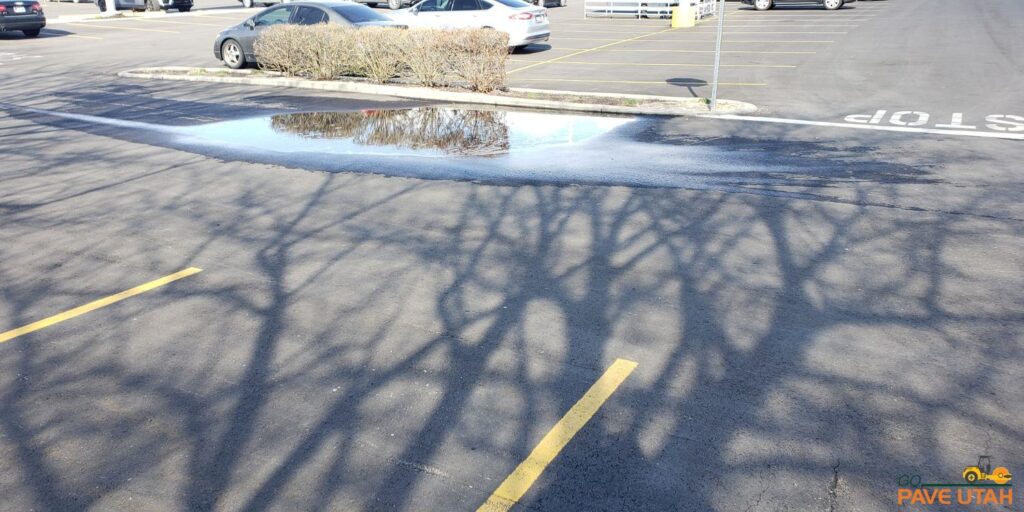
Moisture is the single biggest cause of winter asphalt damage, and it finds its way into asphalt faster than most property managers realize. Snow piles that sit too long, standing water that does not drain, and repeated ice melt applications all increase the moisture load beneath the surface. As water settles into the pavement layers, it weakens the bond between materials and softens the structure. Over time, the surface becomes unstable and begins to separate. Even well-built parking lots can deteriorate quickly if moisture reaches the subbase. Once that happens, surface damage becomes more than a simple repair, it becomes a structural issue that is far more expensive to correct. Mid-winter patching and preventative maintenance can stop this process before it spreads.
Winter asphalt damage is not caused by weather alone. Daily traffic from delivery trucks, employees, and customers adds pressure to areas already weakened by moisture and freezing temperatures. As vehicles pass over the same spots repeatedly, small cracks widen, edges crumble, and depressions form. Snow removal also plays a role. While plowing is necessary for safety, the scraping action wears down the surface and exposes thin or weakened areas. By the time spring arrives, all these factors have combined into a perfect storm of pavement deterioration. This is why winter is not a time to ignore your asphalt. It is the season when your pavement experiences the most stress and needs the most preventative attention.
The best way to stop winter damage is to address problems as soon as they appear. Working with Go Pave Utah ensures your pavement gets the attention it needs during the harshest months. Their team understands how Utah’s climate affects asphalt and provides timely patching, repair, and maintenance services designed to interrupt the damage cycle and extend pavement life. When you take action now, you reduce long-term costs, prevent structural issues, and keep your property safer for every driver and visitor. Do not let winter win the battle against your pavement. Contact Go Pave Utah today for a winter asphalt assessment.