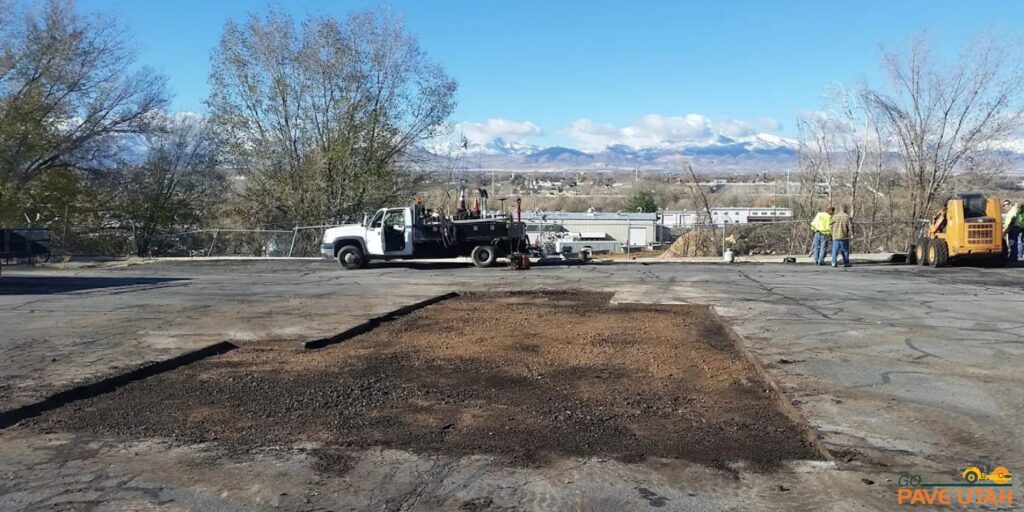
Winter is the most revealing season for asphalt patching. For Utah property managers, cold weather quickly exposes whether a patch was applied with durability in mind or simply placed as a temporary fix. A patch that looks acceptable during mild conditions often struggles once freezing temperatures, moisture, and daily traffic combine. When patching decisions are rushed or treated as short term conveniences, winter accelerates failure and increases long term costs.
As temperatures drop, asphalt materials lose flexibility and become more rigid. This change places stress on patched areas, especially when they are expected to absorb traffic loads and temperature swings at the same time. Patches that are not properly bonded or compacted struggle to move with the surrounding pavement. As a result, cracks form around the edges and material begins to separate. Winter conditions do not create these weaknesses. They expose them. When patching is done without accounting for cold weather performance, failure becomes far more likely before spring arrives.
Moisture is the biggest threat to winter asphalt patching. Water that enters gaps around loosely applied patches freezes and expands, breaking the patch apart from underneath. This process repeats with every freeze and thaw cycle. What begins as a small opening quickly turns into a larger pothole that requires repeated attention. Poor patching allows moisture to compromise stability, increasing surface hazards and accelerating deterioration across surrounding pavement areas.
Many winter patch failures trace back to shortcuts. Cold patch material thrown into a hole without proper cleaning, preparation, or compaction rarely performs as intended. These quick fixes often loosen within weeks under traffic pressure. For commercial properties, repeated patching in the same location becomes a cycle of wasted labor and rising costs. Professional asphalt patching focuses on stabilizing the area, limiting moisture intrusion, and maintaining surface safety until permanent repairs can be scheduled. Cutting corners may save time initially, but winter ensures those savings disappear quickly.
Entrances, drive lanes, and loading zones experience the highest stress during winter. Heavy vehicles apply pressure to patched areas while cold temperatures reduce material flexibility. Poor quality patches in these locations tend to fail first, creating safety concerns and operational disruptions. When patching is approached strategically, these high impact areas receive the attention needed to withstand winter stress instead of becoming repeat problem zones.
Choosing durability over temporary fixes requires understanding how winter patching fits into a broader pavement strategy. Working with Go Pave Utah helps you determine where patching can stabilize conditions safely and how it should be applied to perform under Utah winter conditions. Their approach connects winter patching with ongoing asphalt maintenance, helping you control damage now while preparing for warmer weather improvements. When patching is done correctly, winter becomes manageable instead of costly.
Good enough patching rarely survives winter. When cold weather tests your pavement, quality decisions make the difference between stabilization and failure.