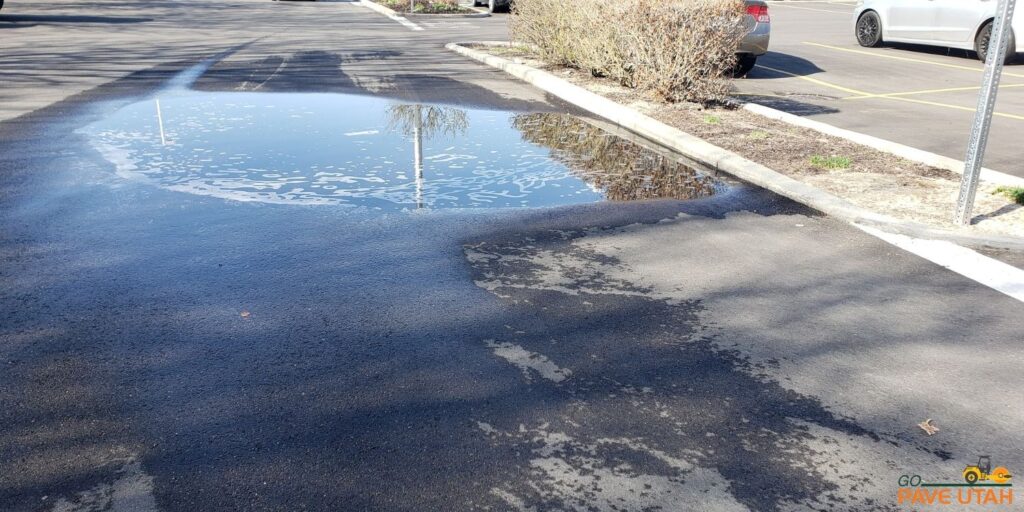
February is when drainage problems stop being theoretical and start becoming visible. As snow melt moves across commercial properties in Utah, water collects in the same areas again and again, revealing where asphalt surfaces are breaking down. These low spots and weakened sections are often early indicators that asphalt patching is needed to stabilize the pavement before surface failures spread. For property managers, addressing these issues early is the difference between contained maintenance and escalating repair costs as spring traffic increases.
As temperatures fluctuate, snow melt moves across parking lots, drive lanes, and access roads until it reaches low spots or weakened sections of pavement. These areas tend to hold water longer because the asphalt has settled, cracked, or lost surface integrity. When water pools repeatedly, it signals that the pavement surface is no longer performing as designed. Addressing these problem areas early with asphalt patching helps restore surface continuity and prevents moisture from penetrating deeper into the pavement structure.
When water remains on the surface, it works its way into cracks and joints. Over time, this moisture softens the materials beneath the asphalt, leading to further settlement and surface breakdown. What begins as a shallow puddle in February can quickly turn into a soft spot or pothole by early spring. Strategic patching stabilizes these compromised areas and slows the progression of damage, buying time before larger repairs are required.
Standing water also creates immediate safety concerns for commercial properties. As pooled water refreezes overnight, it becomes a hidden hazard for drivers and pedestrians. Changing surface conditions increase the likelihood of slips, falls, and vehicle incidents, particularly in high-traffic areas where visibility and reaction time are already limited. When drainage issues are left unaddressed, these risks tend to escalate quickly as surface conditions continue to change.
February provides a clear view of where water is collecting and where pavement is failing. Waiting until spring often means addressing larger, more expensive problems after damage has spread. Targeted asphalt patching during this window helps stabilize weakened areas, improve drainage behavior, and reduce the risk of recurring potholes. These interim repairs protect the pavement structure and make future maintenance more predictable.
Partnering with Go Pave Utah allows you to address drainage-related pavement issues before they escalate. Their team conducts on-site walk-throughs to identify areas where standing water is compromising asphalt performance and recommends patching solutions that align with Utah conditions. By working with Go Pave Utah, you take a proactive approach that limits liability, protects pavement integrity, and keeps repair costs under control as spring approaches.
Standing water is not something to ignore or postpone. It is a signal that your pavement needs attention. Acting now with professional asphalt patching helps ensure your property enters spring stable, safe, and prepared.