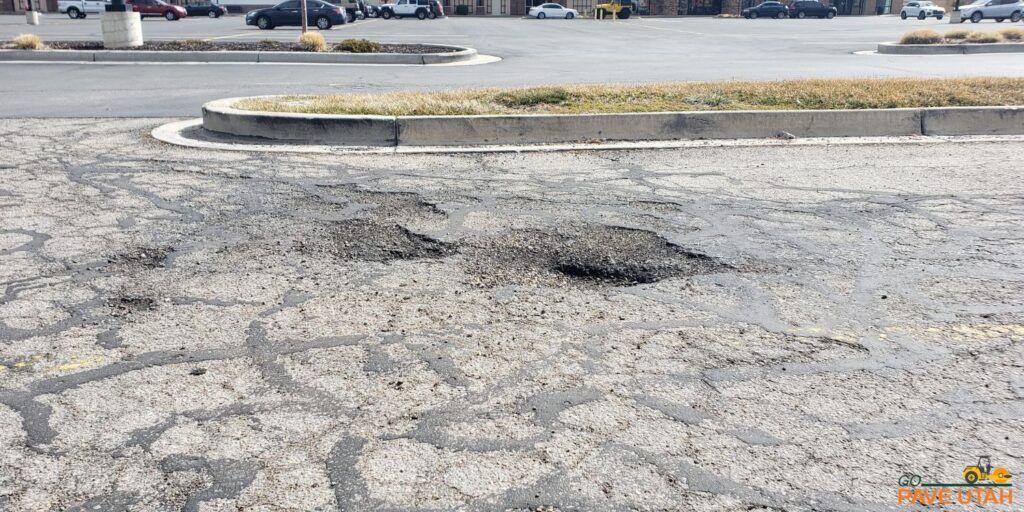
Not all parking lots deteriorate at the same pace. Two commercial properties may have been paved in the same year, exposed to similar weather, and built with similar materials, yet one develops recurring potholes while the other remains structurally sound. For property managers across Utah, understanding the pattern behind pothole formation is the first step toward extending pavement life and reducing long-term repair costs.
Potholes are rarely random. They follow identifiable structural and environmental trends that can be analyzed and managed.
One of the most consistent predictors of accelerated deterioration is traffic concentration. Parking lots do not wear evenly. High stress areas include:
Repeated vehicle loading weakens the asphalt surface and compresses underlying layers. Over time, minor cracks form. When moisture enters those cracks, freeze thaw cycles expand them further, leading to surface separation and eventual pothole formation.
Pavement performance is heavily influenced by traffic loading and structural capacity, particularly when real-world loads exceed design expectations. When parking lots are subjected to heavier vehicles, frequent turning movements, or concentrated traffic patterns beyond what the structure was designed to handle, deterioration accelerates. This reinforces the importance of matching pavement structure to actual site use rather than relying solely on estimated traffic volume during initial construction.
Water is one of the most destructive forces acting on asphalt pavement. Parking lots that deteriorate quickly often share one common trait: poor drainage. When water is allowed to pool, it seeps into surface cracks and weakens the base layers beneath the asphalt.
Utah’s fluctuating temperatures amplify this problem. As water infiltrates pavement and freezes, expansion stresses the asphalt from below. When thawing occurs, voids remain, reducing structural stability. Over time, the surface collapses into potholes.
Effective drainage design plays a significant role in pavement longevity. When water is allowed to pool or infiltrate the surface, it weakens the asphalt structure and softens the underlying base layers. Proper grading and timely maintenance reduce moisture intrusion, protect structural stability, and slow overall deterioration.
Another distinguishing factor is maintenance timing. Parking lots that receive regular crack sealing, patching, and surface evaluation typically outlast those that are addressed only after visible failure occurs. Small cracks and minor surface distress are manageable when treated early. When ignored, they allow moisture to penetrate deeper into the pavement system.
Property managers who delay asphalt maintenance often find themselves addressing widespread pothole formation rather than isolated surface issues.
The pattern of recurring potholes may also point to weaknesses below the surface. If the subbase was inadequately compacted or improperly prepared, structural instability may develop over time. While surface repairs can stabilize isolated areas, recurring failures in the same locations may indicate deeper structural concerns.
This is why a thorough site evaluation is essential before repeated patching efforts.
Working with Go Pave Utah allows commercial property managers to identify why deterioration is occurring rather than simply addressing symptoms. Through detailed site assessments, traffic analysis, and drainage evaluation, their team determines whether issues stem from load concentration, moisture intrusion, deferred maintenance, or subbase instability.
Targeted asphalt patching and proactive asphalt maintenance strategies can interrupt the deterioration cycle and prevent isolated damage from spreading. Instead of reacting to each new pothole, property managers can implement structured solutions that improve pavement performance across the entire property.
Potholes are not random failures. They follow patterns driven by stress, water, and time. Understanding those patterns allows commercial properties in Utah to move from reactive repairs to informed pavement management decisions.