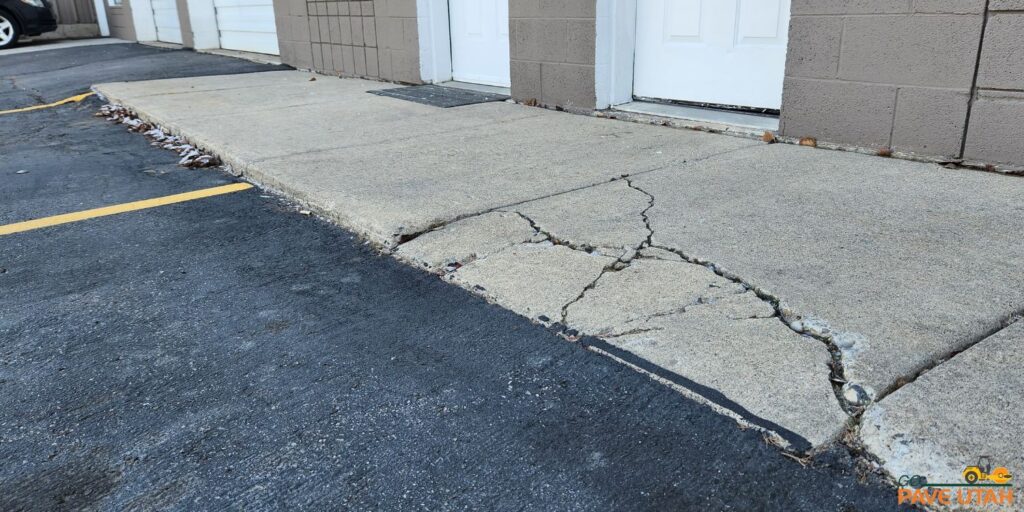
Concrete is often viewed as the toughest surface on a commercial property, but Utah winters quietly challenge that assumption every year. Snow, ice, moisture, and temperature swings work together to stress concrete surfaces in ways that are easy to overlook until spring foot traffic exposes the damage. For property managers and business owners, winter is not just a waiting period. It is an early warning phase that reveals where concrete is beginning to fail.
Concrete joints are designed to manage movement, but winter conditions test their limits. Moisture enters joints during snowmelt or storms and freezes overnight, expanding inside the joint space. Over time, repeated freezing and thawing degrades joint materials and allows slabs to move independently.
Common joint related warning signs include:
When joint failure is ignored, surface cracking and slab displacement often follow.
In Utah, chemical deicers and salt are one of the leading causes of winter concrete damage. While these products improve traction, they also penetrate porous concrete surfaces. When moisture and deicing chemicals combine, the freeze cycle becomes more aggressive and accelerates surface breakdown.
Early indicators of deicer related damage include:
Using the wrong deicing products or applying them too frequently can dramatically shorten the lifespan of concrete. Selecting concrete safe deicers and monitoring affected areas helps limit this type of deterioration.
Snow removal is necessary for safety, but it introduces physical stress that concrete absorbs all winter long. Plow blades, heavy equipment, and repeated vehicle traffic apply pressure to cold, rigid slabs. High traffic zones such as loading docks, drive lanes, and service corridors experience this stress daily.
Warning signs in these areas include:
These issues often become more pronounced once snow clears and traffic increases in spring.
Water that cannot drain properly becomes one of concrete’s biggest winter threats. Standing water freezes, expands, and weakens concrete from the surface downward. Areas with poor slope or blocked drainage see repeat damage each winter.
Signs drainage is contributing to failure include:
Correcting drainage issues early reduces both surface damage and long term structural stress.
Winter may limit large-scale concrete work, but it is the ideal time for evaluation. Working with Go Pave Utah gives commercial property managers access to a professional site safety walk that identifies winter related concrete stress, high risk areas, and emerging damage. Their team reviews joints, surfaces, drainage, and traffic zones to help prioritize repairs and plan spring improvements. By addressing concrete concerns before warmer weather arrives, properties improve safety, reduce repair scope, and protect long term budgets.
Winter does not weaken concrete overnight. It reveals where attention is needed most. Acting now keeps spring from bringing costly surprises.